
You are using an out of date browser. It may not display this or other websites correctly.
You should upgrade or use an alternative browser.
Antifreeze and A/C's
- Thread starter ALKA2710
- Start date
- Joined
- Jun 4, 2001
- RO Number
- 4846
- Messages
- 3,913
Did pink come out the thru hull?
Strainer and thru hull have to be drained or pinked.
- Joined
- Oct 2, 2007
- RO Number
- 28718
- Messages
- 323
That is pretty much all i ever do and as long as it goes thru the pump and out the side, its done. I've never had a problem.
- Joined
- Oct 2, 2007
- RO Number
- 28718
- Messages
- 323
Oh yeah, I disconnect the thru hall and pour it via a funnel into the intake. Then I leave it off the thru hull until re-commisioning. I like to see the entire thru hull during the winter and when re-attaching, I work the thru hull and lubricate well.
Presentationrentals
Member
- Joined
- Jun 15, 2005
- RO Number
- 17844
- Messages
- 107
No question about it, I am an amateur, a weekend boater and part time mechanic for my own boat.
On winterizing, I have done over kill with a ‘better to be safe then sorry’ approach. When it comes to winterizing, I am not a minimalist.
#1) With the boat out of the water I remove the hose from sea strainer that goes between the strainer and the sea cock. With the sea-cock open I poor some pink -50 RV antifreeze down the hose so it runs out the sea-cock.
#2) I exercise the sea cock by closeing and opening it several times.
#3) I remove the cover on the strainer, remove the strainer filter and clean it via rinsing it with a garden hose and nozzle. Replace the filter and close the cover.
#4) I re-attach the hose to the strainer and remove the opposite end of the hose from the sea cock.
#5) I stick the hose in this first gallon of pink -50 RV antifreeze. It’s slightly less then full because I poured some out the sea-cock in step 1. I put 2 gallons thru the A/C unit that I suck in by having my wife turn the A/C on, suck the gallon container empty, then the wife turns the A/C off then repeat with another gallon.
#6) Re-attach the hose to the sea-cock.
#7) In the cabin I remove the air filter for the A/C unit and clean / rinse / replace.
#8) I dump RV antifreeze into the A/C unit’s drip pan so the antifreeze runs out the pan and down to the sealed bilge pump. I keep adding antifreeze until this pump comes on. This take about a ½ gallon. I do this step again with the shower drain. Yes, another ½ gallon. This means it takes me 3 gallons of RV antifreeze to winterize the AC unit.
I’m sure some people can winterize the A/C unit with less RV antifreeze. Its only $2/gallon so were only talking $6. Not enough $money to pay to replace one item if it freezes and ruptures.
Where do you get antifreeze for $2? I just paid $4 a gallon for Quicksilver -50.
Not that I'm really complaining. I bought 2 cases for $48. in the grand scheme of boating, it's not that much. Especially considering how much I saved by winterizing the syetems myself instead of having the marina do it.
Presentationrentals
Member
- Joined
- Jun 15, 2005
- RO Number
- 17844
- Messages
- 107
MichaelNJ,
I purchased pink -50 RV antifreeze at a Midwest hardware store chain called Menards. I would assume Wal*Mart would be close in price.
Storing my boat on land; I have never used any type of anti freeze in my two unit system. I loosen four wing nuts on pump housing & separate an 1/8 or 1/4". I then blow air into thru hull discharge with my compressor. It blows all water out of lines and pump. You do have to suck water out of strainer. Done...zero A/F. Been doing it this way for all 13 years since bought boat new.
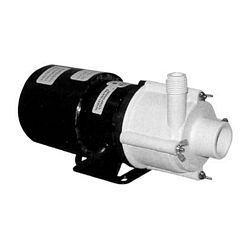
The Cruise Air instruction manual say to disconnect the pump and let the water drain out by gravity. That't it. No Anti Freeze, I use anti freesze to be safe. I think it's a good practice to drain the antifreeze out and store empty. Anti freeze will still gel. But i'd rather have a pocket of antifreeze than a pocket of water.
MichaelNJ, totally agree if you are 100% sure all hoses run downhill from A/C unit. That's the way I installed unit on my previous boat. No air; no A/F, just gravity, no problem for 6 years I owned boat. Current vessel has hoses that are not 100% visible & can't tell if there are any hills & valleys for water to accumulate. That's why I use the compressed air to be sure.