Check valves on Bilge pumps?

PascalG

Moderator
Member
Joined
Sep 16, 2003
RO Number
12212
Messages
12,185
i've always considered having check valves on bilge pumps to be a lousy idea and i know many feel the same. A few surveyors i've talked too feel the same way.

Is there an ABYC standard agaisnt that? recently I was very surprised to see factory installed check valves on all the bilge pumps of a (well known builder)

I just don't see the point... yes, it will get the last 1/2 gallon out but it's not like bilge pump can suck the last drop anyway...

with check valves, it's not a matter of if, but a matter of when.
 
I would rather run a couple extra ft. of hose and have a couple of inches in the bilge than to have our boat sink during the 2 weeks I am at work.
 
Bilge pumps don't develop much pressure and may not be able to open a conventional check valve. Check valves without springs to close them in my experience don't seal very well and any water in the hose is probably going to drain back anyway.
 
I agree the water will drain back. That said I would like some way to get those last quarts out. Unfortunately my boat wasn't designed with a small sump in the bilge so the last 1/2" is a gallon or so spread out over a big area. Then the pump drains a bunch more back when it shuts off.
 
Years ago I got some lift check valves made of plastic from the BOAT/US (I hope this does not break the rules as they are no longer in the sales business) store in Alexandria, VA. They sold them from a bin next to the bilge pump hose roll. There were no springs or metal parts. Pump discharge pressure opened them with no difficulty even with three or so feet of water holding the flapper down on it's seat.

Used them for perhaps ten years without issues. Were working perfectly when I got rid of the boat.

It was nice to have a virtually dry bilge.
 
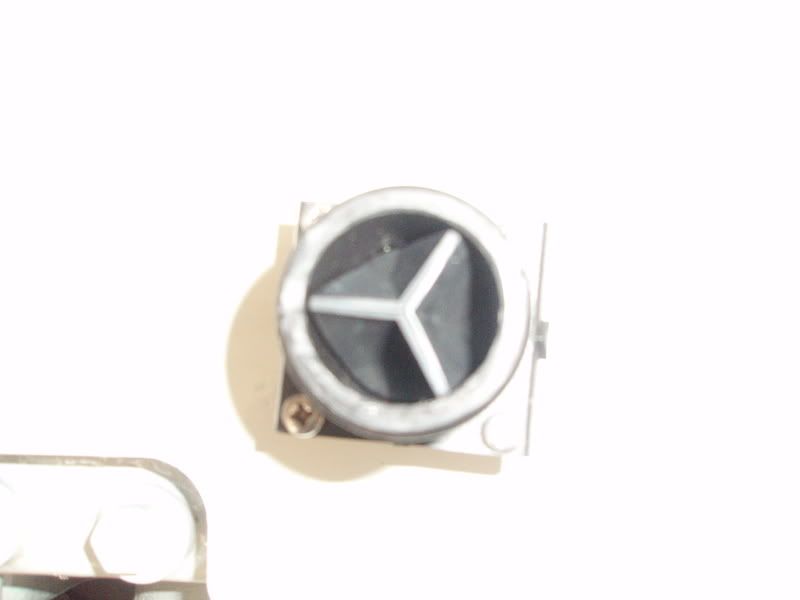
I purchased Whale check valves from boatfix for a non bilge pump type of application. They are the same check valves used by (well known builder). They have three rubber vanes that stay slightly open when no water is in the line. If water trys to come back into the valve on the output side, the vanes close tight on each other. They work with the same principle of duck bill valves in a vacu flush system. They are also the same valves used in many shower/gray water sumps. The valves themselves are very reliable from my experience with them...

P7130296.jpg
 
In the suction line they are OK as long as you also have a stop valve to supplement and insure the suction line is closed. The check valve in the suction line holds water in the line allowing your centrifugal pump to pick up suction. Check valves in a maifold system where the bilge pump is also used as a deck washdown pump is not only a bad idea, it will sink you.
 
L.Keith....I'll be honest here...I didn't really follow everything you said. However, are you saying that some installations actually use the bilge pump for double duty....to pump out the bilge and to suck in seawater for a deck washdown? IMHO, I wouldn't think that is a good idea regardless of wether or not check vavles are used.

In my (well known builder) application, all bilge pumps serve single duty...pump out the bilge. The check valves are installed after the bilge pumps and are mounted vertically along the transom. The discharge thru hull is about a foot over the waterline.
 
Adding a check valve & trying to pump out the last drop of water also has a downside? There is a benefit to those last gallons coming back in? As the last gallon or two that flows back in reverse flushes the bilge pump as a clean out. If I want the last gallon or two removed I always have a hand operated bilge pump & hose to go overboard. I guess you could set up an addditional seperate pump to do it too?
 
I don't think the check valve's intention is to get out every last bit of bilge water....at least not in my (well known builder) application anyway.

From my understanding of the way it works, the intent is to eliminate the bilge pump from over cycling. When the hose run from the pump is fairly long, the pump goes on and the discharge hose is filled with water. When the pump gets enough water out of the bilge then float turns off the pump. Without a check valve, the water that is still in the long run of hose then flows back into the bilge, enough water sometimes, to relift the float and cycle the bilge pump back on....this process can keep repeating itself...like an endless loop.

With the check valve in place, the water in the discharge hose isn't allowed to flow back into the bilge and cycle the pump.......

BTW....I keep my bilge very dry and I use a Turkey baster and some paper towels for the last two quarts or so that pump doesn't get.
 
ABYC section H-22.8.9 "A check valve may be used only when necessary to prevent an automatic pump from cycling on and off due to back flow from the discharge line."
Brian
 
Brian S, Thanks for posting the standard! I just recived the new standards manual for July 2008-2009. The standard is still the same. I agree with Capt. Art, There are benefits to not having a check valve.
 
the check valves are like the one that dominic posted... I guess they should be pretty reliable, no spring or flapper.. BUT...

for some reason i dont' really understand, occasionally the pump would fail to start pumping... not sure why. it woudl run but just no output, seems like the pressure would create an air lock or something. I remove the rubber duckbill, and so far so good... I poured water i the bilge and got it to start 10 straight times...

some water flows back but jsut a little and since bilge pumps can't suck the last 1/2" anyway, it doesn't make a difference.

BTW, another ABYC question... I thought tinned wire was supposed to be used on boats? the wires going to the bilge pump float switch (I had to replace that too) were not tinned, and neither were the wires to the fresh water pumps. regular copper, untinned.
 
One other thing Pascal is that the check valve on either the inlet or outlet side decreases the total head of the pump. The net result is that the flowrate decreases. If you have more than ample flowrate and pressure you probably won't notice it is there. My concern would be with it getting gummed up closed, or open, with stuff from the bilge.
 
quote:

Originally posted by RickB

One other thing Pascal is that the check valve on either the inlet or outlet side decreases the total head of the pump. The net result is that the flowrate decreases. If you have more than ample flowrate and pressure you probably won't notice it is there. My concern would be with it getting gummed up closed, or open, with stuff from the bilge.


The worst part is the most people totally ignore the "lift" equation, when thinking about flow rate. In some pumps this is very significant. I remember years ago when Practical Sailor tested the lift of about 15 manufacturers. They found that some 1000 GPH pumps would not do 500 GPH when required to lift the water 3 feet. I seem to remember Attwood was the worst. All manufactures rate their pumps with no lift, its a marketing thing. So a 500 GPH is never a 500 GPH. You must lift the water or you can't get rid of it. Recently after a survey I was researching an installation and I found that Rule was the only manufacture to actually provide this information on their web site. This was for a sail boat with a deep bilge, had a single 500 GPH, with a lift of over 4 feet, all the way to the rail. The pump sounded like it was dying just trying to lift the water out of the boat.

Also don't forget and I find this all of the time. "All openings that are submerged under normal angles of heel require a sea cock."

I always write up check valves on a survey, they will sink a boat, one small leak and a plugged check valve, leave the boat for a week and its submerged.

I have gotten several calls after insurance surveys from owners asking why their insurance company is requiring that the check valves be removed before they will re-bind the insurance. Its usually "remember we talked about those valves after the survey". I get the same calls about missing seacocks. And as other surveyors on the list can attest. about 1 in 8 boats don't even have a working bilge pump. These people really get mad at their insurance company. I remember one boat that had 5 - 1500 gallon pumps and none worked. Everything from broken wires to the pump to one that actually ran constantly as there was a big hole in the output line that was just pumping water back into the bilge when it was running.

We still have manufacturers putting out boats with seacocks missing from where they should be. .. Fred
 
Fred:

Very informative...thanks.

I have a question with regard to your statement....

Also don't forget and I find this all of the time. "All openings that are submerged under normal angles of heel require a sea cock."

On my (well known builder) vessel, I have under water exhaust. Many other high end boats also have under water exhaust. Are you suggesting that there should be a seacock there?
 
I can understand some clients being upset with Fred about writing up the check valves. My expectation would be that a certified surveyor is applying the standards - not making up how he thinks it should be. If check valves are acceptable, they shouldn't be written up (in the correct installation).

My own feeling on check valves is that they always impose a restriction and reduction in flow, as has been noted. They can also create a blockage that may not otherwise occur from debris. When the pumps are needed we don't want anything to slow them down.

As to preventing recycling of pumps, I would prefer a change to the pumping plan. Maybe the pump can be raised a little. The residual water in the hose can't create more than a quarter to a half inch of water in the bilge. An alternative is to use a smaller pump with a smaller diameter hose. Even on my little 26 ft boat with only a short bilge I have a small pump for normal water and a larger pump (never used) for more water and backup. All this in a very small bilge. The smaller hose drains back very little water. Another possible action is to raise the hose slightly above the outlet if possible. That may actually suck water out even after the pump shuts off.

On my list is a third pump of the remote style with a hose to a low water pickup. I will make that on a manual switch for my personal attention, with a short hose to allow me to pump to a bucket. Should allow me to virtually dry my bilge by placing a bucket and holding a switch.
 
quote:

Originally posted by dominic

Fred:

Very informative...thanks.

I have a question with regard to your statement....

Also don't forget and I find this all of the time. "All openings that are submerged under normal angles of heel require a sea cock."

On my (well known builder) vessel, I have under water exhaust. Many other high end boats also have under water exhaust. Are you suggesting that there should be a seacock there?


Of course not.. but if on a sail boat you have bilge pumps exiting just above the water line, sink drains exiting 10 inches above the water line.. They are all required to have seacocks.
 
quote:

Originally posted by Cap10pat

I can understand some clients being upset with Fred about writing up the check valves. My expectation would be that a certified surveyor is applying the standards - not making up how he thinks it should be. If check valves are acceptable, they shouldn't be written up (in the correct installation).

My own feeling on check valves is that they always impose a restriction and reduction in flow, as has been noted. They can also create a blockage that may not otherwise occur from debris. When the pumps are needed we don't want anything to slow them down.

As to preventing recycling of pumps, I would prefer a change to the pumping plan. Maybe the pump can be raised a little. The residual water in the hose can't create more than a quarter to a half inch of water in the bilge. An alternative is to use a smaller pump with a smaller diameter hose. Even on my little 26 ft boat with only a short bilge I have a small pump for normal water and a larger pump (never used) for more water and backup. All this in a very small bilge. The smaller hose drains back very little water. Another possible action is to raise the hose slightly above the outlet if possible. That may actually suck water out even after the pump shuts off.

On my list is a third pump of the remote style with a hose to a low water pickup. I will make that on a manual switch for my personal attention, with a short hose to allow me to pump to a bucket. Should allow me to virtually dry my bilge by placing a bucket and holding a switch.


Perhaps you should take an ABYC course sometime, the "standards course" teaches one thing only. Thats how to intemperate the standards. My writing up check valves, which most times are not needed, or most times are impeding the proper operation of the pumps is exactly what I am being paid to do. I also write up what in my opinion and almost all surveyors opinion is inadequate number of pumps. And oh by the way. ABYC does not specify the number of pumps required by volume of vessel displacement.
Are you also suggesting we should not express our opinion as to the value of the vessel, that certainly is not part of the standards. but is a requirement. 75% of a survey is opinion, the rest is just pointing out stupidity.. Fred
 
quote:

Originally posted by Cap10pat

I can understand some clients being upset with Fred about writing up the check valves. My expectation would be that a certified surveyor is applying the standards - not making up how he thinks it should be. If check valves are acceptable, they shouldn't be written up (in the correct installation).

My own feeling on check valves is that they always impose a restriction and reduction in flow, as has been noted. They can also create a blockage that may not otherwise occur from debris. When the pumps are needed we don't want anything to slow them down.

As to preventing recycling of pumps, I would prefer a change to the pumping plan. Maybe the pump can be raised a little. The residual water in the hose can't create more than a quarter to a half inch of water in the bilge. An alternative is to use a smaller pump with a smaller diameter hose. Even on my little 26 ft boat with only a short bilge I have a small pump for normal water and a larger pump (never used) for more water and backup. All this in a very small bilge. The smaller hose drains back very little water. Another possible action is to raise the hose slightly above the outlet if possible. That may actually suck water out even after the pump shuts off.

On my list is a third pump of the remote style with a hose to a low water pickup. I will make that on a manual switch for my personal attention, with a short hose to allow me to pump to a bucket. Should allow me to virtually dry my bilge by placing a bucket and holding a switch.


I guess I needed to reply to this again.. My surveys have three sections. "Critical" which is defined as things that should be resolved before the vessel is next operated. As it impeeds the safe operation of the vessel.

"Safety" which is defined as things that need corrected to provide or promote safety to the vessel and crew.

"Recommendations" Self defined..

Check valves.. if they are clogged they go under critical.

If they are operational and not required they go under Recommendations with an explanation of what was observed, and why they should be removed.

Again, this is what I get paid to do.. Fred
 
Back
Top